Laser Kidney Stone Treatment: Procedure, Benefits, Recovery & Who Needs It
Kidney stones can be small enough to pass naturally, but larger stones or stones that block the urinary tract may require active treatment. One minimally invasive option used by urologists is laser kidney stone treatment, usually performed as part of a procedure called ureteroscopy.
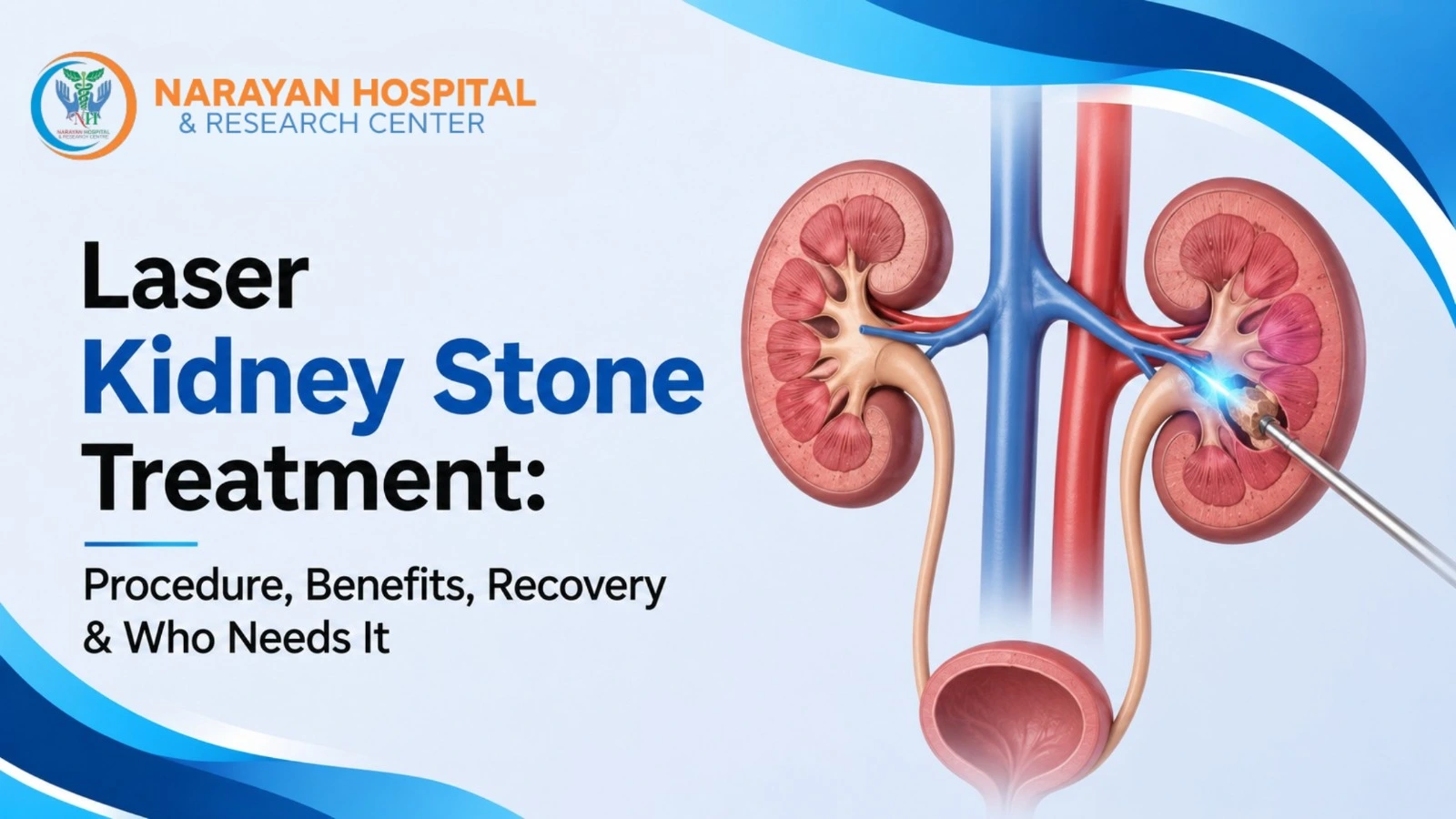
During ureteroscopy, a thin instrument called a ureteroscope is passed through the urinary tract to reach the ureter or kidney. Once the stone is located, the doctor can remove it or break it into smaller pieces. Laser energy may be used to fragment the stone so that it can be removed or passed more easily.
Laser treatment is not automatically required for every kidney stone. The appropriate treatment depends on factors such as the stone’s size, location, symptoms, obstruction, overall health and other clinical findings. If you have been diagnosed with a kidney or urinary stone, understanding how laser stone treatment works can help you have a more informed discussion with your doctor.
What Is Laser Kidney Stone Treatment?
Laser kidney stone treatment is a minimally invasive method of breaking a kidney or ureteric stone into smaller fragments using laser energy.
It is commonly performed during ureteroscopy. The doctor guides a small ureteroscope through the natural urinary passage to reach the stone. Once the stone is visualized, a laser may be used to fragment it. The fragments may then be removed using specialized instruments or allowed to pass through the urinary tract, depending on the situation.
Because the procedure is performed through the urinary tract rather than through a large external incision, it is often considered a minimally invasive approach. However, laser treatment is only one of several kidney stone treatment options. Other approaches include observation, medication in selected cases, shock wave lithotripsy and percutaneous nephrolithotomy.
Why Do Kidney Stones Need Treatment?
Not every kidney stone needs immediate removal. Small stones may pass naturally through the urinary tract without a procedure. However, larger stones may become stuck and block urine flow, causing significant pain or other complications.
When Treatment May Be Considered
Kidney stones can sometimes cause urinary tract infections and, if complications are not appropriately managed, may affect kidney function. The decision to remove a stone should therefore be made after appropriate medical evaluation.
-
Treatment may be considered when a kidney stone:
- Is unlikely to pass naturally
- Causes significant or persistent pain
- Blocks urine flow
- Causes repeated urinary problems
- Is associated with infection
- Causes bleeding
- Continues to grow or cause symptoms
- Requires removal based on its size or location
Who May Need Laser Kidney Stone Treatment?
Laser treatment may be considered for selected patients with kidney or ureteric stones, particularly when a stone needs active removal and ureteroscopy is an appropriate approach. Your doctor may consider laser treatment in the following situations.
1. The Stone Is Unlikely to Pass Naturally
Some stones are too large or are located in a position where natural passage is unlikely. In such situations, active stone removal may be recommended.
2. The Stone Is Causing Significant Pain
A stone that repeatedly causes severe or persistent pain may require treatment rather than continued observation.
3. The Stone Is Blocking Urine Flow
A stone can become lodged in the ureter and obstruct urine flow. This may require prompt medical evaluation and, depending on the circumstances, intervention.
4. Other Treatment Options Are Not Suitable
Shock wave lithotripsy and other procedures may be appropriate for some patients, but treatment selection depends on the stone’s characteristics and the patient’s condition. Ureteroscopy allows the urologist to directly visualize the urinary tract and treat a stone from inside the body.
5. The Stone Is Located in the Ureter or Kidney
Ureteroscopy can be used to visualize and treat stones located in the ureters or kidneys.
How Does Laser Kidney Stone Treatment Work?
Although the exact procedure varies from patient to patient, the treatment generally involves several stages, from the initial evaluation through to the placement of a stent where one is needed.
Step 1: Pre-Procedure Evaluation
Before treatment, your doctor will evaluate your symptoms and medical history. Your doctor may also check for a urinary tract infection before ureteroscopy, and if an infection is present, treatment may be required before proceeding with the stone procedure.
-
Evaluation may include:
- Physical examination
- Urine testing
- Blood tests
- Imaging
- Assessment of kidney function
- Evaluation of stone size and location
Step 2: Anaesthesia
Ureteroscopy is generally performed under anaesthesia so that the patient remains comfortable during the procedure. Your medical team will discuss the type of anaesthesia appropriate for your procedure and health condition.
Step 3: Ureteroscope Is Inserted
The urologist gently passes a thin ureteroscope through the urinary passage. The scope travels through the bladder and into the ureter, and depending on where the stone is located, the urologist can also access the kidney. The ureteroscope provides a view of the urinary tract so the doctor can locate the stone.
Step 4: The Stone Is Broken With Laser Energy
Once the stone is identified, laser energy may be used to break it into smaller fragments. The smaller fragments can then be removed or managed so they can pass through the urinary tract.
-
The exact technique depends on factors such as:
- Stone size
- Stone location
- Stone composition
- Number of stones
- Anatomy of the urinary tract
- Overall patient condition
Step 5: Stone Fragments May Be Removed
Depending on the procedure, the doctor may use small instruments to retrieve stone fragments. In some situations, very small fragments are left to pass naturally.
If a stone or its fragments are recovered, the doctor may send them for analysis to identify the stone type. Knowing the stone composition can help with future prevention.
Step 6: A Ureteral Stent May Be Placed
In some cases, the doctor may temporarily place a ureteral stent. A stent is a thin flexible tube that can help urine flow through the ureter while swelling settles or during the recovery period. Not every patient will need a stent, and the decision depends on the procedure and individual circumstances.
Benefits of Laser Kidney Stone Treatment
Laser treatment performed during ureteroscopy can offer several potential benefits for appropriately selected patients. It is important to remember that these benefits do not mean laser treatment is the best option for every patient.
Minimally Invasive Approach
The ureteroscope is introduced through the natural urinary passage, so the procedure does not require the type of large external incision associated with traditional open surgery.
Direct Visualization of the Stone
Unlike treatments that work from outside the body, ureteroscopy allows the urologist to directly see the stone and urinary tract.
Stone Fragmentation
Laser energy can break a stone into smaller pieces, allowing the fragments to be removed or pass through the urinary tract.
Can Treat Ureteric and Selected Kidney Stones
Ureteroscopy can be used to locate and treat stones in the ureter and kidney.
Often Allows Same-Day Discharge
Many ureteroscopy procedures are performed in a hospital setting and patients can often go home the same day, depending on the procedure, anaesthesia and individual condition.
Laser Treatment vs Shock Wave Lithotripsy
Both laser treatment and shock wave lithotripsy can be used to treat kidney stones, but they work differently. The table below sets out the main practical differences between the two approaches.
|
Feature |
Laser Treatment |
Shock Wave Lithotripsy |
|
Main approach |
Through the urinary tract |
Shock waves from outside the body |
|
Common procedure |
Ureteroscopy |
SWL |
|
Stone visualization |
Direct visualization |
No direct internal visualization |
|
Stone fragmentation |
Laser energy |
Shock waves |
|
Stone fragments |
May be removed or passed |
Usually pass through urinary tract |
|
Anaesthesia |
Usually required for ureteroscopy |
Anaesthesia or sedation may be used depending on circumstances |
|
Suitability |
Depends on stone and patient factors |
Depends on stone and patient factors |
There is no single procedure that is best for every kidney stone. The choice depends on the size, location and characteristics of the stone, as well as the patient’s overall health.
Laser Treatment vs Percutaneous Nephrolithotomy
For larger kidney stones, doctors may consider percutaneous nephrolithotomy (PCNL). PCNL involves creating a small access point through the back to reach the kidney. A nephroscope is then used to locate and remove the stone. Laser energy may also be used to break larger stones into smaller pieces during PCNL.
This means that the term “laser treatment” does not refer to only one procedure. Laser energy can be used in different stone procedures depending on the stone and the treatment plan.
What Is Recovery Like After Laser Kidney Stone Treatment?
Recovery varies from one patient to another. Do not compare your recovery timeline with another patient’s — the recovery period depends on the stone, procedure, overall health and whether additional treatment was required.
Temporary Symptoms After the Procedure
These symptoms can occur after the procedure and may be related to the procedure itself or a temporary ureteral stent. Most settle as the urinary tract recovers.
-
Some patients may experience temporary:
- Mild burning during urination
- Small amounts of blood in the urine
- Mild bladder or kidney-area discomfort
- Increased urinary frequency or urgency
Instructions Your Doctor Will Provide
Before you leave the hospital, your team will give you specific guidance covering the practical side of recovery. Following these instructions closely matters more than any general timeline you may read.
-
Your doctor will provide specific instructions regarding:
- Fluids
- Medicines
- Physical activity
- Driving
- Work
- Follow-up appointments
- Stent removal, if applicable
What Is a Ureteral Stent and Why Is It Used?
A ureteral stent is a thin tube placed inside the ureter to help maintain urine drainage. After ureteroscopy, a temporary stent may sometimes be placed while swelling settles or to help urine flow.
Common Stent-Related Symptoms
These symptoms are usually temporary but should be discussed with your doctor if they become severe. If you have a stent, make sure you understand when and how it will be removed before leaving the hospital.
-
A stent can sometimes cause:
- Frequent urination
- Urinary urgency
- Discomfort in the bladder or kidney area
- Pain during urination
Possible Risks of Laser Kidney Stone Treatment
Like any medical procedure, ureteroscopy and laser stone treatment can have risks. These risks vary depending on the individual patient and procedure, and your urologist should explain the expected benefits, alternatives and potential risks before treatment.
-
Potential complications may include:
- Urinary tract infection
- Bleeding
- Pain or burning during urination
- Difficulty urinating
- Injury to the urinary tract
- Ureteral narrowing or scarring
- Complications related to anaesthesia
When Should You Seek Medical Help After Treatment?
Contact your healthcare team promptly if you develop concerning symptoms after ureteroscopy. These symptoms should not be ignored after a urinary stone procedure.
-
Seek medical attention if you experience:
- Fever or chills
- Severe or worsening pain
- Heavy bleeding or blood clots in the urine
- Difficulty or inability to urinate
- Severe discomfort
- Persistent or worsening urinary symptoms
How Long Does Laser Kidney Stone Treatment Take?
A simple ureteroscopy can be relatively short, while a more complex stone treatment may take longer. Your doctor can provide a more accurate estimate after reviewing your imaging and medical history.
-
The duration of the procedure can vary depending on:
- Number of stones
- Stone size
- Stone location
- Stone hardness
- Anatomy of the urinary tract
- Whether additional procedures are required
Is Laser Kidney Stone Treatment Painful?
The procedure itself is performed under anaesthesia, so you should not experience the procedure in the same way as untreated kidney stone pain.
Some temporary discomfort can occur after ureteroscopy. Patients may experience mild burning while urinating, urinary urgency, blood in the urine or discomfort, particularly if a temporary stent has been placed. Your doctor can prescribe or recommend appropriate pain management based on your condition.
Is Laser Kidney Stone Treatment Safe?
Laser kidney stone treatment can be an effective minimally invasive option for appropriately selected patients. However, “safe” does not mean risk-free. Every procedure has potential complications, and the suitability of laser treatment depends on the patient’s medical condition and the characteristics of the stone.
A qualified urologist should determine whether ureteroscopy with laser treatment, shock wave lithotripsy, PCNL, observation or another approach is appropriate.
How Can You Prevent Kidney Stones After Treatment?
Removing a kidney stone does not necessarily prevent another stone from forming. Prevention depends partly on understanding why the stone developed.
Stay Adequately Hydrated
Drinking enough fluid helps dilute urine and may reduce the concentration of substances that can form stones. Fluid requirements vary depending on individual health conditions.
Understand Your Stone Type
If a removed stone is analyzed, the results can help guide prevention.
Review Your Diet
Depending on the stone type, your doctor may recommend changes involving sodium, animal protein, calcium or oxalate intake.
Follow Up as Recommended
People who repeatedly develop kidney stones may require additional testing, including urine evaluation, to identify factors contributing to stone formation.
When Should You See a Doctor for Kidney Stones?
A blocked urinary tract combined with infection can require urgent medical attention. Do not assume that severe kidney stone pain will always resolve on its own.
-
Consult a doctor if you have:
- Severe pain in the side or back
- Pain moving toward the lower abdomen or groin
- Blood in the urine
- Pain or burning during urination
- Difficulty passing urine
- Repeated vomiting
- Fever or chills
- A known kidney stone with worsening symptoms
Laser Kidney Stone Treatment in Patna
If you have been diagnosed with a kidney stone or urinary stone, the first step is to determine its size, location and effect on the urinary tract.
Narayan Hospital offers surgical and minimally invasive care services. You can learn more about its Laparoscopic Surgery services and General Surgery services as part of the hospital’s broader surgical care.
Related Patient Resources
For patients researching minimally invasive surgery, these related Narayan Hospital resources may also be useful.
-
Further reading:
|
Important: These pages discuss broader surgical and laparoscopic care. Laser kidney stone treatment is a urological procedure, so patients should consult an appropriate specialist to determine whether laser ureteroscopy or another stone treatment is suitable. |
You can also contact Narayan Hospital to enquire about consultation and available treatment services.
Final Takeaway
Laser kidney stone treatment is a minimally invasive approach that can be used to break and remove selected kidney or ureteric stones. It is commonly performed during ureteroscopy, allowing the doctor to directly visualize the urinary tract and treat the stone with laser energy.
However, laser treatment is not suitable or necessary for every kidney stone. The right treatment depends on the stone’s size, location, symptoms, obstruction, infection risk and the patient’s overall health.
If you have severe kidney stone pain, blood in your urine, difficulty passing urine, fever, chills or repeated vomiting, seek medical evaluation promptly. For patients considering kidney stone treatment in Patna, an appropriate specialist evaluation is the best way to understand whether laser treatment, shock wave lithotripsy, PCNL, observation or another treatment option is right for them.
Medical Disclaimer: This article is intended for general educational purposes only and does not replace professional medical diagnosis, treatment or advice. Treatment decisions should be made by a qualified healthcare professional after evaluating the individual patient.
Frequently Asked Questions
What is laser kidney stone treatment?
Laser kidney stone treatment uses laser energy to break a kidney or ureteric stone into smaller fragments. It is commonly performed during ureteroscopy, in which a thin scope is passed through the urinary tract to reach the stone.
Is laser treatment better than other kidney stone treatments?
Not necessarily. The best treatment depends on the stone’s size, location, characteristics and the patient’s overall health. Options can include observation, shock wave lithotripsy, ureteroscopy and PCNL.
Is laser kidney stone removal a surgery?
Laser stone treatment is performed as part of a minimally invasive procedure, commonly ureteroscopy. It is performed in a hospital or surgical setting under anaesthesia.
How is the laser inserted?
The laser is used through instruments passed through the ureteroscope. The ureteroscope itself is guided through the urinary tract to reach the ureter or kidney.
Does every kidney stone need laser treatment?
No. Some small stones can pass naturally without a procedure. Active treatment may be recommended for stones that are larger, cause significant symptoms, obstruct urine flow or create other clinical concerns.
Will I need a stent after laser treatment?
Not every patient needs a stent. In some cases, a temporary ureteral stent is placed to help urine drain while swelling settles or during recovery.
How soon can I return to normal activities?
The recovery timeline varies according to the procedure and individual health. Your doctor will advise you when you can return to work, driving, exercise and other activities.
Can kidney stones come back after laser treatment?
Yes. Removing an existing stone does not eliminate the factors that caused it. Preventive measures such as adequate hydration, appropriate dietary changes and medical follow-up may help reduce the risk of future stones.
What symptoms after treatment require urgent medical attention?
Fever or chills, severe pain, inability to urinate, heavy bleeding or blood clots, and severe or persistent discomfort should be reported promptly to a healthcare professional.