Open Surgery vs Laparoscopic Surgery: Which Is Right for You?
When surgery is advised, one of the first questions patients ask is whether it can be done by “keyhole” instead of a big cut. It is a fair question, because the approach affects your pain, your scar, how many days you spend in hospital, and how quickly you get back to normal life. The honest answer is that both open and laparoscopic surgery have their place — and the right choice depends on your condition, not on which one sounds more modern.
Understanding open vs laparoscopic surgery helps patients walk into their consultation informed and ask better questions. Patients opting for the best laparoscopic surgery in Patna often experience less pain and faster recovery, while open surgery remains the safer route in certain complex situations.
What Is Open Surgery?
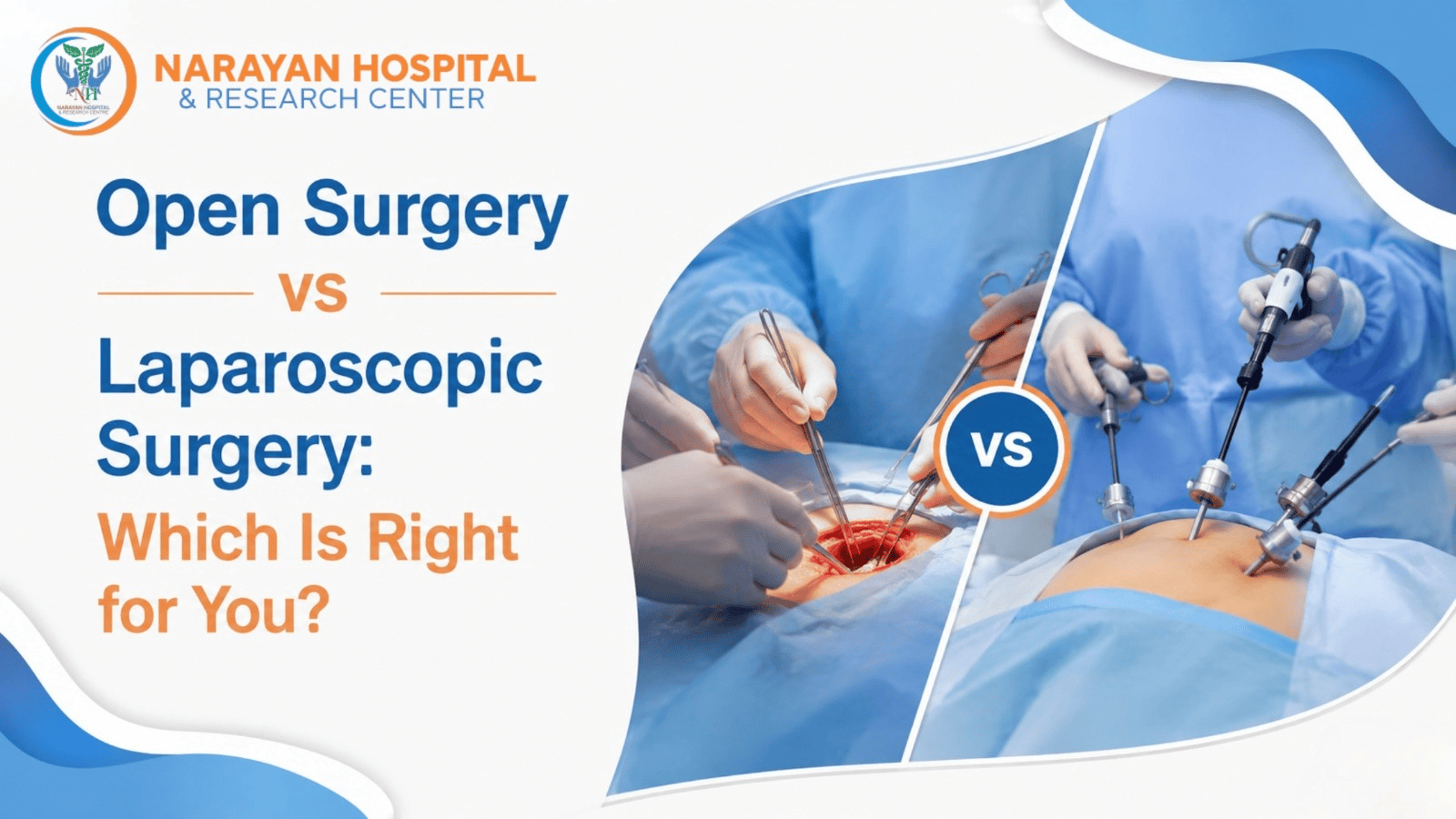
Open surgery is the traditional method, where the surgeon makes a single larger incision to directly see and operate on the affected area. The surgeon works with their own hands inside the operative field and has direct touch — what surgeons call tactile feedback. It has been performed successfully for generations, and being advised open surgery does not mean your hospital lacks technology. In the right case, it is simply the correct decision.
When Open Surgery Is the Right Choice
Despite the popularity of minimally invasive techniques, there are clear situations where the direct access and control of open surgery make it the safer route. Surgeons choose it when speed, wide clearance, or clear direct vision matters most for patient safety.
-
Open surgery is generally preferred for:
- Emergencies where bleeding or contamination must be controlled quickly
- Extensive adhesions (internal scar tissue) from previous operations
- Very large, recurrent or complicated hernias
- A severely inflamed or densely stuck gallbladder with unclear anatomy
- Certain cancer operations requiring wide clearance
- Patients unsuitable for the gas pressure used during laparoscopy
What Is Laparoscopic (Keyhole) Surgery?
In laparoscopic surgery, the surgeon makes a few small cuts — usually three or four, each roughly 0.5 to 1 cm long — and inserts a thin telescope fitted with a camera (the laparoscope) along with fine instruments. The operation is guided by a magnified, high-definition view on a screen, which often shows delicate structures more clearly than the naked eye can.
How Keyhole Surgery Works
Understanding the steps of the procedure helps remove much of the fear around it. The patient is asleep under general anaesthesia throughout, and the entire operation is performed through small ports rather than one large wound.
-
The procedure step by step:
- General anaesthesia is given, so you feel nothing during the operation
- The abdomen is gently inflated with carbon dioxide gas to create working space
- The laparoscope and two or three tiny instrument ports are placed
- The surgeon operates while watching the magnified view on the monitor
- The gas is released and the small cuts are closed with fine stitches or glue
Benefits of the Minimally Invasive Approach
Because the incisions are small, less tissue is cut, which means less trauma to the body, reduced blood loss, and a lower risk of wound-related complications. Most patients also appreciate the cosmetic outcome, as the small keyhole scars fade significantly over time.
-
Key benefits include:
- Smaller incisions and faint scars
- Less post-operative pain and blood loss
- Shorter hospital stay, sometimes day-care
- Faster return to work and daily activities
For a fuller explanation, read our articles on what laparoscopic surgery is and why laparoscopic surgery is done.
Open vs Laparoscopic Surgery: Key Differences
The two approaches differ mainly in incision size, pain levels, scarring, hospital stay, and recovery speed. Both are performed under anaesthesia and both are safe when carried out by experienced surgeons in a well-equipped facility. Understanding these differences helps patients set realistic expectations before their operation.
Incision, Pain, and Scarring
Open surgery uses one larger cut, which usually means more post-operative pain, a longer scar, and a slightly higher chance of wound infection. Laparoscopic surgery uses a few tiny cuts, which typically results in less pain, small faint scars, and lower wound-related risks.
-
Main differences include:
- One larger cut versus a few 0.5–1 cm keyhole cuts
- More pain relief needed after open surgery
- Smaller, faster-fading scars with laparoscopy
Hospital Stay and Recovery
Recovery is the difference most patients actually feel. Open surgery usually needs a longer admission and a slower return to work, with heavy lifting restricted for four to six weeks. After keyhole surgery, many patients walk within hours, manage light activity in the first week, and return to desk work within two to three weeks.
-
Typical recovery pattern:
- Laparoscopy: often shorter stay, sometimes same-day discharge
- Open surgery: longer stay with gradual return to light work
- Both: heavy lifting only on your surgeon’s advice
A common worry with keyhole surgery is pain. In practice, most patients are pleasantly surprised — our guide on whether laparoscopy is painful addresses this honestly.
How the Two Approaches Compare for Common Operations
The general comparison changes slightly depending on which operation you need. Here is how the choice usually plays out for the procedures most often performed in Patna.
Gallbladder and Appendix Removal
Laparoscopic removal is the standard approach worldwide for uncomplicated gallstone disease, and laparoscopic appendicectomy allows a quick return to studies or work. However, a severely infected gallbladder or a burst appendix with widespread infection may be handled more safely through open surgery.
-
What usually happens:
- Routine gallstone cases: keyhole, home within a day or two
- Severely infected or stuck gallbladder: open may be safer
- Burst appendix with infection: open allows a thorough clean-out
Hernia Repair and Diagnostic Laparoscopy
Both approaches work well for hernias and usually involve a mesh. Keyhole repair suits hernias on both sides or a recurrence after previous open surgery, while very large or strangulated hernias are frequently better repaired open. When the cause of persistent abdominal pain is unclear, a diagnostic laparoscopy lets the surgeon look inside directly and sometimes treat the problem in the same sitting.
-
Common scenarios include:
- Both-sided or recurrent hernias: often keyhole
- Very large or strangulated hernias: often open
- Unexplained abdominal pain: diagnostic laparoscopy with biopsy if needed
Conversion, Risks, and Safety
Occasionally a surgeon begins laparoscopically, finds unexpected scarring or unclear anatomy, and completes the operation as open surgery. This is called conversion, and it is a deliberate safety decision, not a complication or a failure. Every operation carries some risk, whichever route is used, and both approaches share the general risks of anaesthesia, bleeding, and infection.
Understanding the Risks of Each Approach
Open surgery carries a somewhat higher chance of wound infection and a later incisional hernia at the scar, simply because the wound is bigger. Laparoscopic surgery has lower wound-related risks but carries its own small risks linked to the ports and the carbon dioxide gas. Serious complications are uncommon with either approach when performed by an experienced team.
-
Key safety points:
- Wound infection risk is slightly higher with open surgery
- Laparoscopy has rare risks linked to ports and gas
- Surgeon experience and proper facilities matter most
Cost and Ayushman Bharat Coverage
Laparoscopic surgery uses specialised equipment, so the procedure itself can carry a higher price tag. Against that, a shorter hospital stay, fewer medications, and an earlier return to earning often narrow the gap in the total cost of getting well. Many laparoscopic and open procedures are also covered under Ayushman Bharat PM-JAY for eligible patients.
-
Cost factors include:
- Equipment costs versus shorter hospital stay
- Fewer dressings and medication days with keyhole surgery
- Ayushman Bharat coverage for eligible patients at Narayan Hospital
So Which One Is Right for You?
There is no single winner. Laparoscopic surgery is often preferred for routine hernia, gallbladder and appendix operations because recovery is easier, while open surgery is recommended for complex, heavily scarred, or emergency cases. The right decision comes from a proper examination and your reports, not from personal preference alone.
-
The decision usually rests on:
- Your diagnosis and how advanced it is
- Your previous abdominal operations
- Your overall health and fitness for anaesthesia
- The urgency of the situation
A consultation at our general surgery department is exactly for this — a good surgeon will explain why one approach suits you better and answer every question before you decide.
Conclusion
Both open and laparoscopic surgery are safe, proven approaches with clear strengths. Keyhole surgery offers smaller incisions, less pain, and faster recovery for many routine procedures, while open surgery remains the safer, more controlled option for complex and emergency cases. Understanding open vs laparoscopic surgery helps patients approach the decision with realistic expectations.
At Narayan Hospital, patients receive both open and laparoscopic procedures from experienced surgeons who recommend the approach best suited to each condition. Recognized as one of the best hospital in Patna, it provides modern operation theatres, advanced laparoscopic equipment, and complete post-operative care under one roof.